RFQ Readiness for Energy Audits: Comprehensive Buyer's Guide
Define precise requirements for energy audits before issuing a Request for Quotation.
Tell us what you need. We'll help you find the right suppliers.
Free · No account required · AI-assisted
- No account required
- AI-assisted
- Free to start
Related Buyer Guide Articles
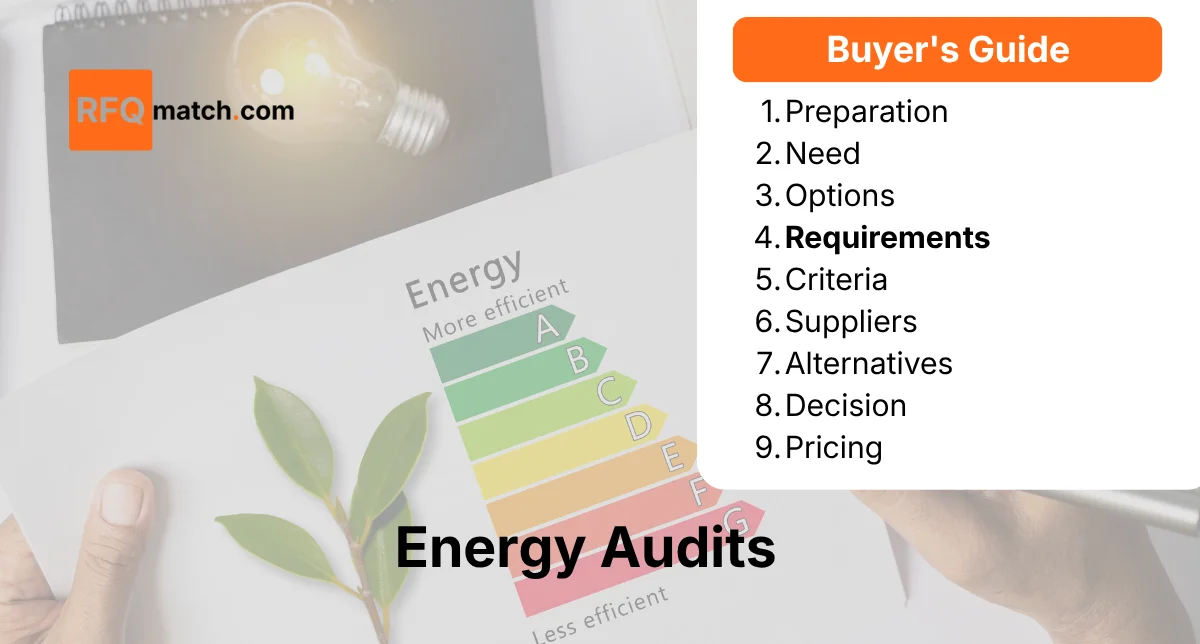
Energy audits are pivotal in optimizing energy efficiency and reducing operational costs. Establishing precise requirements before issuing a Request for Quotation (RFQ) is crucial to ensure that procurement professionals receive accurate proposals tailored to their specific needs. Clear specifications lead to more reliable cost estimates and enable effective supplier evaluation.
This guide introduces the Energy Audit RFQ Readiness Checklist—a robust framework designed to prepare your organization for a successful sourcing process. The checklist includes defining audit scopes, setting performance benchmarks, and identifying necessary certifications. These components help streamline the RFQ process by aligning internal objectives with market capabilities.
Achieving RFQ-readiness means articulating clear expectations and establishing a structured approach, ensuring that potential suppliers fully understand your requirements. By following this guide, you will be equipped to compare options effectively, evaluate supplier capabilities, and ultimately select the most suitable partners for your energy audit needs.
Specification Framework
Creating a detailed specification framework for energy audits can significantly enhance the quality of proposals you receive. This framework helps you delineate essential requirements, prioritize features, and integrate the latest industry advancements. By categorizing specifications into 'must-have' and 'nice-to-have', procurement professionals can ensure alignment with organizational goals while remaining adaptable to new solutions.
Budget Planning
Budget Planning for Energy Audits
Effective budget planning for energy audits involves understanding the cost structure, identifying key pricing factors, and setting appropriate budget ranges. By leveraging strategic cost optimization techniques, procurement professionals can ensure cost-effective sourcing of energy audit services.
Typical Cost Structure Breakdown
Energy audit costs are primarily composed of service fees, data analysis charges, and reporting costs. These components vary depending on the scope and complexity of the audit.
Factors Influencing Pricing
Several factors influence the pricing of energy audits, including the size of the facility, complexity of systems, and the level of detail required in the audit report. Additionally, geographical location and the expertise of the audit team can impact costs significantly.
Budget Range Guidance
Energy audits typically range from $5,000 to $50,000, depending on the factors mentioned above. Establishing a clear budget range helps in aligning expectations and ensuring competitive proposals from suppliers.
Cost Optimization Tips
To optimize costs, consider bundling services, negotiating long-term contracts, and prioritizing audits for high-consumption areas first. Utilizing the latest technology and software can also streamline the process and reduce costs.
Timeline Considerations
Timeline Planning for Energy Audits Procurement
Effective timeline planning is crucial for the successful procurement of energy audits. Understanding each phase of the project, potential delays, and setting realistic expectations can significantly impact the outcome. This section outlines typical project phases, duration, and factors affecting timelines.
Typical Project Phases and Durations
Energy audits generally follow a structured approach. Each phase has specific activities and dependencies, ensuring a comprehensive evaluation of energy consumption and efficiency opportunities.
Factors Extending Timelines
Several factors can extend the timeline of energy audits, such as complex facility layouts, availability of historical energy data, and stakeholder engagement delays. Accurate initial assessments can mitigate these risks.
Setting Realistic Expectations
Setting clear and realistic expectations from the outset ensures alignment between procurement teams and suppliers. This involves acknowledging potential challenges and planning for contingencies.
By following a well-structured timeline, procurement professionals can ensure that energy audits are conducted efficiently, with minimal disruptions and maximum insight.
Stakeholder Alignment
Stakeholder Alignment for Energy Audits
Aligning stakeholders is crucial in the procurement of energy audits. Stakeholders from different departments offer unique perspectives and requirements that can significantly influence the audit's success. Involving the right individuals from the outset ensures a comprehensive understanding of organizational needs and fosters collaborative decision-making.
Key Stakeholders to Involve
Identifying and involving key stakeholders early in the process can streamline communication and enhance the quality of the RFQ. Typical stakeholders include facility managers, financial officers, sustainability coordinators, and procurement specialists.
Understanding Stakeholder Concerns
Each stakeholder group has specific concerns related to energy audits. Facility managers may focus on operational disruptions, while financial officers prioritize cost-effectiveness. Sustainability coordinators are likely to emphasize environmental impact, and procurement specialists will concentrate on contract terms and supplier evaluations.
Building Consensus
Building consensus among stakeholders requires understanding their priorities and aligning them with organizational goals. Regular meetings, transparent communication, and clear documentation of objectives and expectations are essential. Utilizing tools like the Stakeholder Alignment Matrix can facilitate this process by mapping out concerns, inputs, and required sign-offs.
Common Mistakes
Ensuring a successful procurement process for energy audits involves avoiding common pitfalls that can lead to inefficiencies and increased costs. By understanding these mistakes, procurement professionals can enhance their RFQ process and achieve better outcomes.
tip
**Ensure Comprehensive Supplier Evaluation** Align your specifications with current industry advancements to effectively evaluate supplier capabilities and leverage modern solutions in energy audits.
| Component | % of Budget | Variables |
|---|---|---|
| Service Fees | 50% | Audit team expertise, scope |
| Data Analysis | 30% | Complexity of data, software used |
| Reporting Costs | 20% | Level of detail, customization |
tip
**Budget Optimization** Negotiate fixed-price contracts to mitigate unexpected costs and ensure budget stability.
warning
**Mistake: Incomplete Scope Definition** Failing to clearly define the scope of the energy audit can lead to inaccurate proposals and unforeseen costs. Ensure all areas and systems to be audited are explicitly listed to receive targeted bids.
warning
**Mistake: Overlooking Stakeholder Input** Ignoring key stakeholders can result in misaligned objectives and unmet needs. Engage relevant departments early to incorporate diverse insights and requirements into the RFQ.
warning
**Mistake: Neglecting Timeline Constraints** Underestimating the time required for audit completion can disrupt operations. Establish realistic timelines and communicate them clearly with potential suppliers to ensure feasibility.
warning
**Mistake: Inadequate Supplier Evaluation Criteria** Using vague or insufficient criteria for supplier evaluation can compromise the selection process. Develop a comprehensive evaluation framework that includes technical expertise, experience, and compliance with industry standards.
warning
**Mistake: Ignoring Budget Flexibility** Rigid budget constraints can limit supplier options and innovation. Allow for some flexibility in budget considerations to explore a wider range of solutions and technologies.

RFQmatch.com
RFQmatch.com is a platform that connects buyers who submit Requests for Quotation (RFQs) with qualified suppliers, making sourcing faster, easier, and more transparent.
View company profileRelated Articles
Intravenous & Arterial Products Pricing Guide: Understanding Costs and ROI
6 min read
Simplifying the Intravenous and Arterial Products Choice
3 min read
Comparing Intravenous and Arterial Products: Making the Final Choice
5 min read
Supplier Evaluation for Intravenous and Arterial Products
5 min read
Intravenous and Arterial Products Evaluation Framework: A Buyer's Guide
7 min read