Energy Audits: Define Needs for Effective Solutions
A structured approach to defining energy audit needs for effective procurement solutions.
Tell us what you need. We'll help you find the right suppliers.
Free · No account required · AI-assisted
- No account required
- AI-assisted
- Free to start
Related Buyer Guide Articles
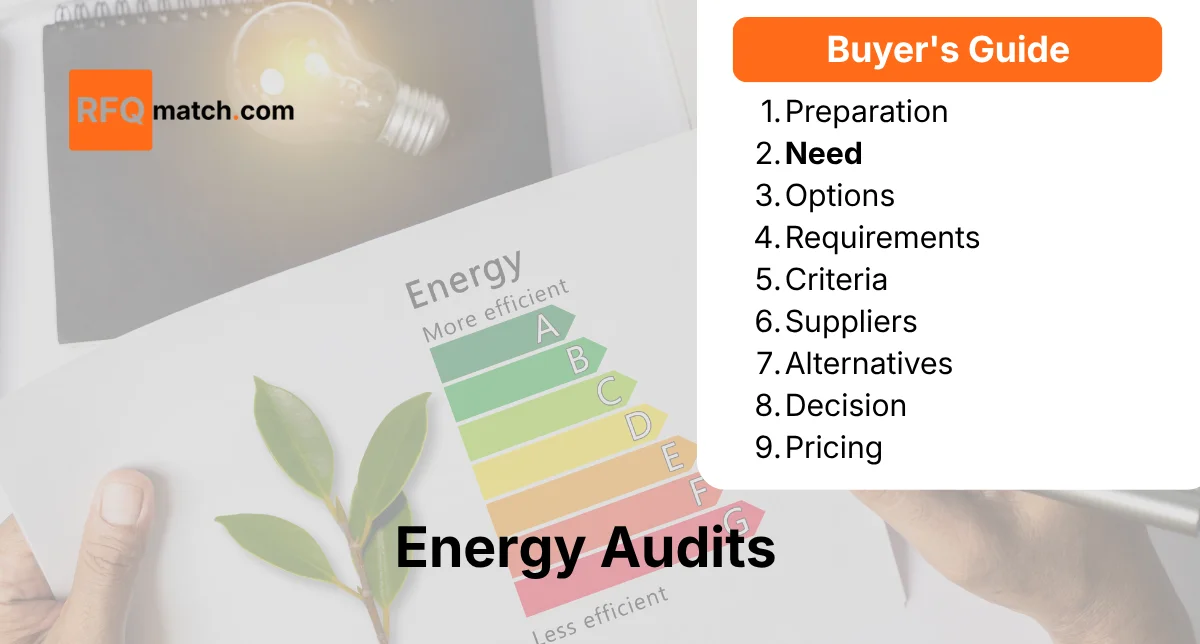
Recognizing the Need for Energy Audits
Energy audits are essential for identifying inefficiencies and optimizing energy use. Recognizing the symptoms that indicate a need for an energy audit can help organizations tackle energy-related challenges effectively. Here are common symptoms that might signal the need for an energy audit:
Validating the Need for an Energy Audit
Determining whether an energy audit is necessary involves distinguishing symptoms from root causes. Addressing the root cause often yields more effective solutions. Conducting a detailed analysis of each symptom can provide clarity and guide your decision-making process.
Root Cause Analysis
Root Cause Analysis in Energy Audits Procurement
Root cause analysis (RCA) is a critical step in the procurement of energy audits. It ensures that organizations address underlying issues rather than just surface symptoms. By understanding the true causes of energy inefficiencies, procurement professionals can make informed decisions and select the right audit services.
The 5 Whys Methodology
The 5 Whys is a straightforward yet effective technique for uncovering root causes. By asking 'why' repeatedly, organizations can dig deeper into the underlying issues:
Fishbone Diagram Technique
The Fishbone Diagram, or Ishikawa Diagram, helps visualize potential causes of inefficiencies. By categorizing potential causes into areas like equipment, processes, and people, organizations can systematically identify issues.
Actionable Takeaways
Scope Definition
Defining the Scope for Energy Audits Procurement
Defining the scope of an energy audit is a crucial step in ensuring that your procurement process is aligned with organizational objectives and delivers measurable results. A well-defined scope sets clear boundaries on what the energy audit will cover, helping to manage expectations and avoid scope creep.
Setting Boundaries for Effective Audits
To effectively define the scope, procurement professionals must distinguish between in-scope and out-of-scope elements. This helps focus the audit on areas that will provide the most value and align with strategic goals.
In-Scope Considerations: These include areas and systems where inefficiencies are suspected, such as HVAC systems, lighting, and industrial processes. They should be directly linked to the symptoms and root causes identified in previous analyses.
Out-of-Scope Considerations: These might involve areas where energy consumption is already optimized or systems that are scheduled for replacement. Focusing on these areas can divert resources from more critical issues.
Scope Definition Framework
Utilize a structured framework to clearly define the scope. This framework will guide the decision-making process and ensure all stakeholders have a shared understanding of the audit's objectives.
Actionable Takeaways
Success Criteria
Defining Success Criteria for Energy Audits Procurement
Establishing clear success criteria is essential for evaluating the effectiveness of energy audits. These criteria should encompass both quantitative and qualitative measures to provide a comprehensive assessment framework.
Quantitative Success Metrics
Quantitative metrics offer concrete data points to assess the success of energy audits. These include:
Qualitative Success Criteria
Qualitative criteria assess the broader impact of energy audits on operations and stakeholder satisfaction:
Actionable Takeaways
| Symptom | Possible Root Cause | Questions to Ask |
|---|---|---|
| Unexpectedly High Energy Bills | Inefficient energy systems | Has there been a change in energy usage patterns? |
| Inconsistent Energy Usage Patterns | Operational inefficiencies | Are there specific times when usage spikes? |
| Old or Inefficient Equipment | Outdated technology | When was the last upgrade or maintenance performed? |
| Frequent Equipment Breakdowns | Overworked systems | Are maintenance schedules being followed? |
| Regulatory Compliance Pressure | New regulations | What standards must be met to comply? |
| Environmental Sustainability Goals | Corporate directives | What are the target reductions for energy use? |
| Occupant Comfort Complaints | HVAC system issues | Are temperature and lighting levels consistent throughout the facility? |
info
**The Power of Root Cause Analysis** Root cause analysis can reduce energy waste by up to 30%. Using methods like the 5 Whys helps uncover true inefficiencies.
| Dimension | In-Scope | Out-of-Scope | Decision Criteria |
|---|---|---|---|
| Systems | HVAC, Lighting, Industrial Processes | Optimized Systems, Scheduled Replacements | Focus on high energy consumption areas |
| Locations | Main Facilities, High Usage Sites | Low Impact Sites | Prioritize locations with highest energy use |
| Timeframe | Immediate Needs, Short-term Goals | Long Term Projects | Align with organizational energy goals |
| Budget | Within Allocated Budget | Exceeding Budget Limits | Ensure cost-effectiveness without compromising quality |
| Criterion | Metric | Target | Measurement Method |
|---|---|---|---|
| Energy Cost Reduction | Percentage | 10-20% | Monthly energy bill comparison |
| Payback Period | Years | 1-3 | Cost-benefit analysis |
| Carbon Footprint Reduction | Percentage | Specified target | Emission reports |
| Improved Equipment Performance | Qualitative | Enhanced functionality | Operational logs |
| Stakeholder Satisfaction | Qualitative | Positive feedback | Surveys and interviews |
tip
**Align Success Metrics with Organizational Goals** Ensure that the success criteria for energy audits are directly linked to your organization's strategic objectives and sustainability commitments.

RFQmatch.com
RFQmatch.com is a platform that connects buyers who submit Requests for Quotation (RFQs) with qualified suppliers, making sourcing faster, easier, and more transparent.
View company profileRelated Articles
Intravenous & Arterial Products Pricing Guide: Understanding Costs and ROI
6 min read
Simplifying the Intravenous and Arterial Products Choice
3 min read
Comparing Intravenous and Arterial Products: Making the Final Choice
5 min read
Supplier Evaluation for Intravenous and Arterial Products
5 min read
Intravenous and Arterial Products Evaluation Framework: A Buyer's Guide
7 min read