Modernizing Warehouses: Navigating the Automation Wave for 2026
Enhancing Efficiency with AI, IoT, and Robotics
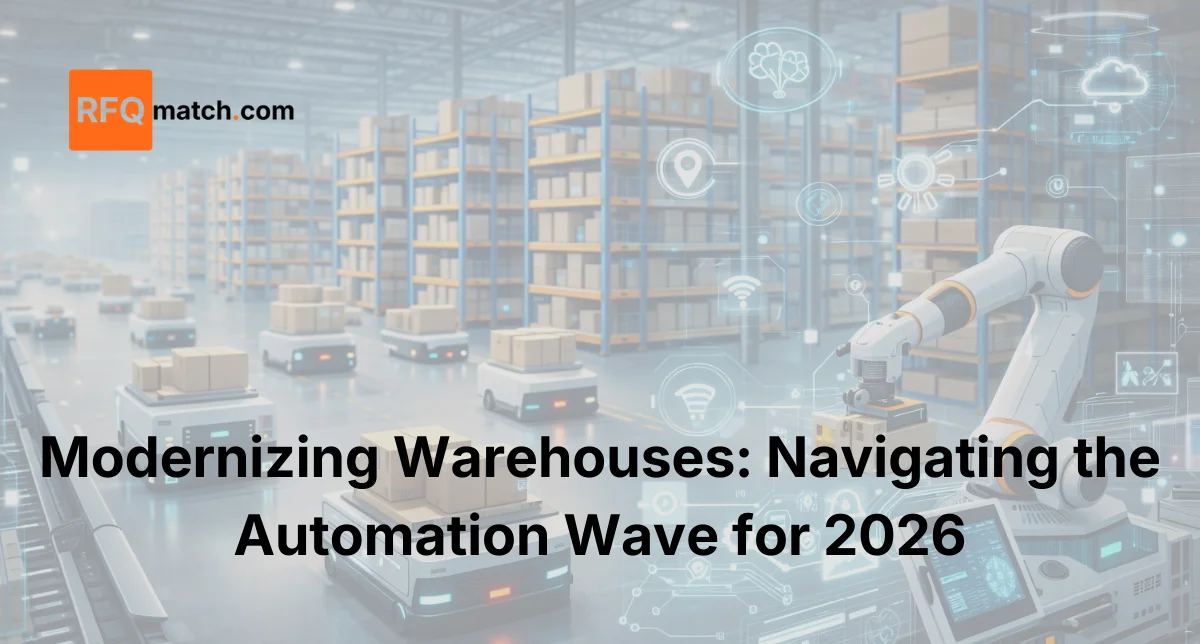
Warehouse automation is becoming a crucial strategy for maintaining a competitive edge in logistics and supply chain management. By 2026, integrating technologies such as intelligent robotics, artificial intelligence (AI), the Internet of Things (IoT), and advanced software systems will be indispensable. These innovations promise to enhance efficiency and operational excellence, making them essential for navigating the complexities of modern supply chains.
The Growing Importance of Automation
Driving Factors and Market Projections
With the anticipated surge in global logistics demand, automation is crucial. According to MarketsandMarkets, the warehouse automation market is projected to reach $30 billion by 2026. This emphasizes the need for speed, accuracy, and cost-effectiveness to meet consumer expectations for faster delivery.
info
Automation Market Projection The warehouse automation market is projected to reach $30 billion by 2026, highlighting the rapid growth and importance of technological advancements.
Case Studies: Industry Leaders
Companies like Amazon and Alibaba are investing significantly in automated warehousing systems to maintain their leadership in the e-commerce sector. Their advancements underscore the importance of integrating technology to improve service delivery and customer satisfaction.
Gaining a Competitive Edge
Operational Benefits
Automation offers substantial advantages by optimizing operations, reducing human error, and lowering labor costs. Businesses that leverage these technologies can streamline supply chains, enhance customer satisfaction, and increase market standing.
Real-World Impact
For instance, Automate-X has enabled companies to reduce order processing time by up to 50%, providing a competitive edge in handling higher volumes with precision and efficiency.
Emerging Technologies and Trends
Intelligent Robotics and AMRs
Autonomous mobile robots (AMRs) and collaborative robots (cobots) are transforming order fulfillment by automating tasks like sorting, picking, and transporting goods. These robots work alongside human employees, enhancing both efficiency and safety.
tip
Maximize Worker-Robot Collaboration Effective use of autonomous mobile robots (AMRs) can enhance safety and efficiency when working alongside human employees, especially in tasks like sorting and transporting goods.
AI and Machine Learning
AI and machine learning are revolutionizing predictive analytics, helping warehouses anticipate demand shifts and optimize stock levels. AI-powered systems offer real-time data for better decision-making, while predictive maintenance minimizes operational downtime.
IoT Expansion
IoT devices enhance supply chain visibility and traceability by collecting and transmitting data. Sensors monitor environmental conditions to ensure product quality and safety, critical for items like pharmaceuticals.
Advanced Software Systems and ASRS
Automated storage and retrieval systems (ASRS) streamline inventory management by reducing operational costs and enhancing space utilization. These solutions maximize vertical space, allowing multi-level warehouses without physical expansion.
| Technology | Key Benefits | Example |
|---|---|---|
| Intelligent Robotics | Increased efficiency and safety | AMRs and Cobots |
| AI and Machine Learning | Predictive analytics and demand forecasting | AI-WMS |
| IoT Devices | Enhanced visibility and traceability | Environmental monitoring sensors |
| ASRS | Optimal space utilization and cost reduction | Multi-level warehouse systems |
Focusing on Efficiency and Operational Excellence
Automation aims to achieve operational excellence and heightened efficiency. Real-time data and analytics enable swift process refinement and informed decision-making. As connected devices proliferate, cybersecurity becomes critical, necessitating robust security measures.
Cloud-based systems provide flexibility, allowing decision-makers to access data globally and respond promptly to challenges.
warning
Beware of Cybersecurity Risks As connected devices multiply, warehouses must implement robust cybersecurity measures to protect data integrity and prevent breaches.
Benefits and Challenges of Warehouse Automation
Benefits
- Increased Accuracy and Speed: Automated systems reduce errors and ensure faster service.
- Cost Reduction: Automation lowers labor costs, allowing reallocation to strategic activities.
- Scalability: Solutions scale easily to market demands without extensive restructuring.
Challenges
- Upfront Costs: Significant initial investments require careful ROI consideration.
- System Integration: New and existing systems must integrate seamlessly for optimal benefit.
- Change Management: Successful adoption requires strategic employee training and process adjustments.
- Data Security: Growing connectivity necessitates strong cybersecurity protocols to protect data integrity.
Q: How can warehouse automation technologies like AI and robotics improve efficiency?
A: AI and robotics enhance efficiency by automating repetitive tasks such as sorting and picking, reducing human error, and speeding up operations. These technologies also provide predictive analytics to optimize inventory management and demand forecasting, leading to better resource allocation and reduced downtime.
Q: What are some challenges associated with integrating new automation systems in warehouses?
A: Key challenges include the significant upfront costs and the complexity of integrating new technologies with existing systems. Additionally, effective change management is crucial as employees need training to adapt to new workflows. Robust cybersecurity measures are also necessary to protect connected systems.
Q: Is it necessary to overhaul existing warehouse systems to adopt automation?
A: Not necessarily. While some upgrades might be required, many automation solutions can be integrated with existing systems to enhance capabilities progressively. This approach minimizes disruption and allows businesses to modernize operations without complete overhauls.
Q: How do IoT devices contribute to warehouse automation?
A: IoT devices enhance supply chain visibility by collecting real-time data on inventory and environmental conditions. This data allows for improved traceability and product quality assurance, crucial for handling sensitive items like pharmaceuticals.
Q: What should businesses consider when planning for automation investments?
A: Businesses need to evaluate the potential return on investment, ensuring that the benefits of increased efficiency and reduced costs outweigh the initial expenses. It's also important to consider the scalability of solutions, ensuring they can grow with market demands and align with long-term organizational goals.
Conclusion
The path to warehouse modernization through automation is clearly defined. By 2026, incorporating advanced technologies will be crucial for staying competitive in a rapidly evolving market. Embracing innovations like intelligent robotics, AI, IoT, and analytics enables businesses to unlock new efficiency levels and achieve operational excellence.
To fully benefit from warehouse automation, strategic planning and thoughtful challenge consideration are essential. These technologies promise to enhance performance and redefine business operations, creating a resilient supply chain equipped for future demands.

RFQmatch.com
RFQmatch.com is a platform that connects buyers who submit Requests for Quotation (RFQs) with qualified suppliers, making sourcing faster, easier, and more transparent.
View company profileRelated Articles

The impact of the EU Machinery Regulation 2023/1230 on RFQ questions, supplier selection and monitoring compliance
4 min read

10 Ways Buyers Can Assess and Check Security Compliance of New Suppliers
3 min read

Top 10 Reasons Suppliers Lose RFQ Opportunities
3 min read

Energy Audits Pricing Guide: Understanding Costs and ROI
6 min read
Energy Audit Decision: Simplifying the Choice
3 min read