Navigating Sustainable Seafood Procurement in Southeast Asia
Strategies and Challenges in Malaysia and Singapore
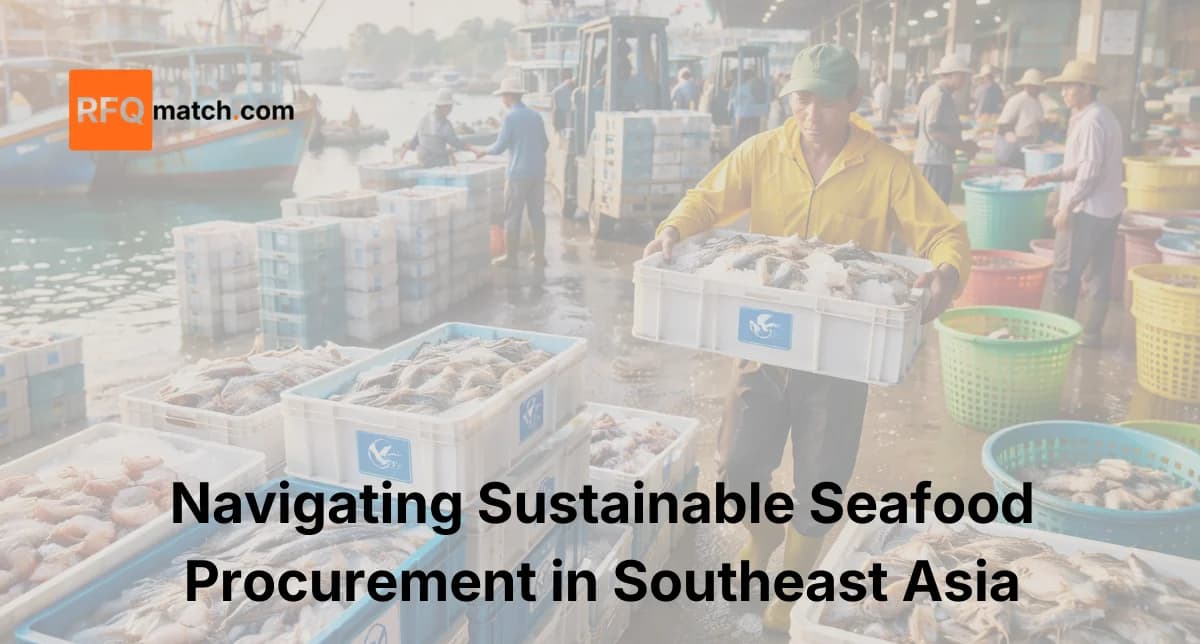
Rising Demand for Sustainable Seafood
In recent years, the demand for sustainable seafood has increased significantly, fueled by greater environmental awareness and conscious eating habits. This trend is particularly evident during Chinese New Year, a time of heightened seafood consumption across Southeast Asia. This cultural occasion presents both challenges and opportunities for procurement professionals: meeting consumer demand while adhering to sustainable practices. As sustainability increasingly impacts purchasing decisions, supply chain leaders must expertly navigate regional complexities to fulfill these demands ethically.
info
Peak Demand During Festivals Sustainable seafood demand surges around Chinese New Year in Southeast Asia, creating both challenges and opportunities for procurement professionals.
Regional Challenges: Balancing Tradition with Sustainability
Malaysia: Tradition and Sustainable Practices
Seafood is integral to Malaysia's cultural traditions, serving as both a daily staple and a festive centerpiece. However, this cultural significance poses challenges for sustainable procurement. Overfishing and limited sustainable practices among local fisheries put pressure on ecosystems.
Encouragingly, some regions are engaging local fishing communities through training programs and incentives to adopt sustainable practices. The challenge remains scaling these initiatives for a nationwide impact.
Singapore: Addressing Import Reliance
Singapore's reliance on imports—approximately 90% of its seafood comes from abroad—brings its own challenges. Ensuring sustainability and transparency in international supply chains is crucial.
Efforts by organizations like Singapore's Agri-Food & Veterinary Authority, promoting certification standards such as the Aquaculture Stewardship Council (ASC), reflect a strong commitment to sustainability. However, ongoing efforts are needed to ensure traceability and maintain rigorous quality checks, given the complexity of international supply chains.
| Region | Challenges | Strategies |
|---|---|---|
| Malaysia | Overfishing; Limited sustainable practices | Training programs; Incentives for sustainable practices |
| Singapore | High import reliance; Need for supply chain transparency | Certification standards; Traceability efforts |
Bridging the Consumer Awareness Gap
Despite growing environmental concerns, awareness of eco-labels like the Marine Stewardship Council’s blue fish mark remains limited. These labels are essential for guiding consumers towards sustainable products, yet confusion diminishes their impact.
Studies, such as those by YouGov, reveal that only a minority of consumers recognize and understand these labels. To address this, enhanced consumer education is crucial. Retailers and brands can leverage digital platforms and in-store promotions to clarify these labels, promoting informed and sustainable purchasing decisions.
tip
Leverage Digital Education Enhancing consumer education through digital platforms and in-store promotions is essential to clarify eco-labels and promote sustainable purchasing decisions.
Traceability and Certification: Building Trust
Certifications and traceability systems are vital for building consumer trust regarding seafood origins. These mechanisms assure consumers of the sustainability credentials of their purchases.
Modern technologies like blockchain can significantly enhance traceability by providing an immutable record of the seafood supply chain from catch to table. This transparency not only boosts consumer confidence but also ensures compliance with international standards, essential for maintaining credibility in global markets.
warning
Traceability is Key Without robust traceability systems, maintaining consumer trust and adherence to international standards becomes difficult, undermining credibility in global markets.
Strategies for Procurement Teams and Retailers
Strengthening Procurement Teams
Procurement teams need to go beyond sourcing certified products; they must ensure availability and clear labeling to aid consumer choices. Strategies should include building strong supplier relationships with a focus on sustainability and rigorous quality checks.
Collaboration with marketing departments is key. Joint campaigns can inform and educate consumers about sustainability labels through storytelling, highlighting how sustainable choices contribute to marine conservation.
Retailer Engagement
Retailers serve as the direct link between procurement efforts and consumer action. By prominently displaying certified products and providing educational materials, they can encourage a shift toward sustainable consumption.
Introducing dedicated sections for sustainable products can reinforce a brand's commitment to sustainability. Retailer-consumer dialogue and feedback are essential, allowing retailers to stay aligned with evolving consumer expectations.
tip
Collaboration is Crucial Procurement teams should work closely with marketing to run consumer education campaigns, focusing on the impact of sustainable choices on marine conservation.
Q: How can procurement teams in Southeast Asia promote sustainable seafood during peak periods like Chinese New Year?
A: Procurement teams should focus on sourcing certified seafood products and ensure these are clearly labeled to facilitate consumer recognition. Collaborating with retailers to enhance in-store promotions and utilizing digital marketing to educate consumers on sustainability benefits can help bridge awareness gaps.
Q: What steps can be taken to improve consumer awareness of eco-labels such as the Marine Stewardship Council’s blue fish mark?
A: Retailers and brands can improve eco-label awareness by using digital platforms and in-store promotions to educate consumers. Storytelling campaigns that highlight the impact of sustainable choices on marine conservation can also enhance the visibility and understanding of these labels.
Q: What role does technology play in ensuring the traceability of sustainable seafood?
A: Technologies like blockchain provide an immutable record of the seafood supply chain, enhancing transparency from catch to table. This boosts consumer confidence in sustainability claims and ensures compliance with international standards.
Q: What challenges does Singapore face in ensuring sustainable seafood imports?
A: Given its reliance on imports for 90% of its seafood, Singapore faces challenges in maintaining transparency and quality in international supply chains. Efforts include promoting certification standards and engaging in rigorous quality checks to manage these challenges effectively.
Q: How can local fishing communities in Malaysia be encouraged to adopt sustainable practices?
A: Training programs and incentives can encourage local fisheries to embrace sustainable methods. Scaling these initiatives nationwide could mitigate overfishing and enhance the sustainability of Malaysia’s seafood procurement.
Conclusion: Future Directions in Sustainable Seafood Supply Chains
Advancing sustainable seafood procurement in Southeast Asia requires innovation, collaboration, and ongoing education. Evolving procurement practices, integrating robust traceability and certification systems, and prioritizing consumer education are vital.
Retailers must support these efforts, enhancing access to sustainable options and engaging consumers in the sustainability narrative. Continuing investment in consumer awareness and retailer dedication is crucial for thriving sustainable seafood supply chains.
By addressing diverse challenges and implementing strategic initiatives, procurement professionals can optimize supply chains to meet the rising demand for sustainable seafood in Southeast Asia, ensuring that sustainability becomes the norm in seafood consumption.
Sources
Source: supplychaindigital.com

RFQmatch.com
RFQmatch.com is a platform that connects buyers who submit Requests for Quotation (RFQs) with qualified suppliers, making sourcing faster, easier, and more transparent.
View company profileRelated Articles

The impact of the EU Machinery Regulation 2023/1230 on RFQ questions, supplier selection and monitoring compliance
4 min read

10 Ways Buyers Can Assess and Check Security Compliance of New Suppliers
3 min read

Top 10 Reasons Suppliers Lose RFQ Opportunities
3 min read
Energy Audits Pricing Guide: Understanding Costs and ROI
6 min read
Energy Audit Decision: Simplifying the Choice
3 min read