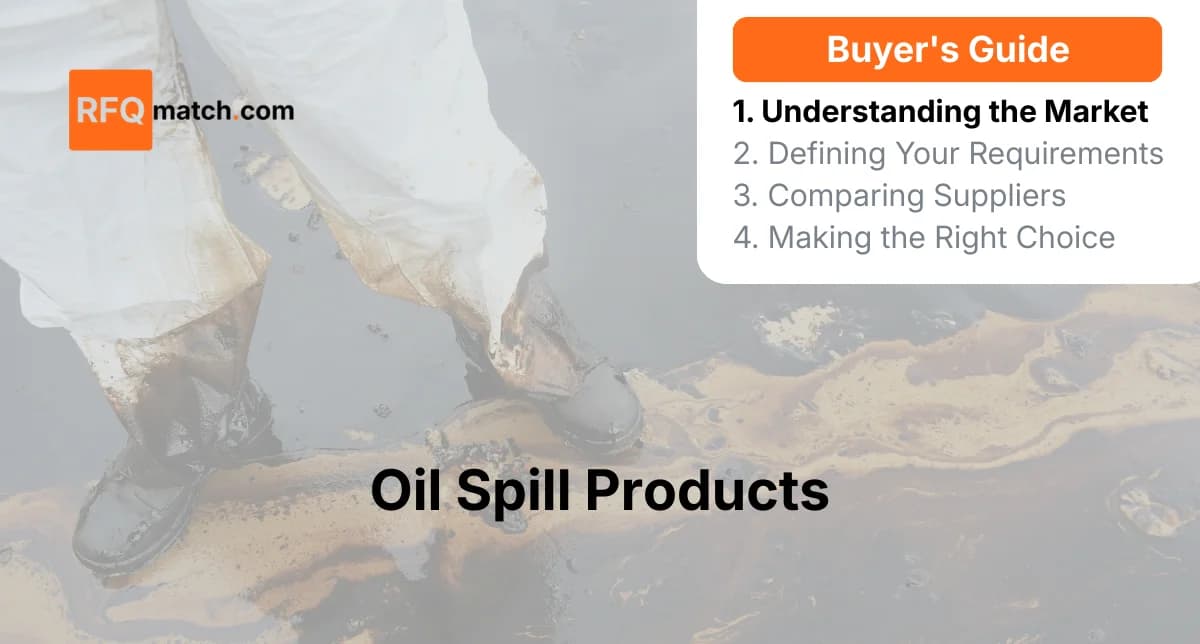
Master Oil Spill Cleanup Procurement
Uncover the Hidden Challenges and Prepare to Outpace Competitors in RFQs
Related Buyer Guide Articles
The International Tanker Owners Pollution Federation reports an annual average of 7,000 metric tons of oil spills worldwide. Procurement professionals in the oil spill cleanup sector face challenging scenarios where response time and product efficacy are crucial. Yet, many buyers overlook the intricate complexities behind selecting the right cleanup products, often resulting in delayed responses and increased costs.
The "complexity gap" in this sector stems from underestimating factors such as product compatibility with specific oil types, varying environmental regulations, and logistical constraints in supply chain management. This gap can mean the difference between efficient containment and environmental disasters with hefty legal implications.
This guide aims to equip procurement experts with actionable insights into the hidden challenges of oil spill cleanup product procurement. From understanding core product attributes and regulatory frameworks to mastering supplier evaluations, you'll gain tools to optimize your Requests for Quotes (RFQs) and stay ahead in competitive bidding processes.
Complexity Factors
Selecting oil spill cleanup products goes beyond immediate price considerations. Buyers often neglect critical complexity factors that can severely affect responsiveness and cost-effectiveness. Understanding these factors can prevent common procurement pitfalls and ensure readiness for environmental challenges.
Hidden Costs
In procurement, transparency in costing can make or break the cost-effectiveness of acquiring oil spill cleanup products. Overlooked costs can obscure the true financial landscape and inflate budgets unexpectedly. By identifying and mitigating these hidden expenses, procurement professionals can optimize spending and enhance operational efficiency.
Risk Assessment
Risk Assessment for Oil Spill Cleanup Products Procurement
Procurement decisions in oil spill cleanup products involve managing a complex array of risks that can significantly impact both environmental and financial outcomes. This section outlines the key risk categories you must evaluate, assesses their probabilities, and suggests mitigation strategies to enhance decision-making resilience.
1. Product Efficacy and Suitability
2. Compliance with Regulatory Standards
3. Supply Chain Disruptions
Effectively managing these risks requires proactive planning and strategic supplier relationships. Prioritize risk assessments in RFQ development to ensure strategic alignment with environmental objectives and operational readiness.
| Factor | Why Underestimated | Impact | Common Mistake |
|---|---|---|---|
| Oil Type Compatibility | Different oils require specific cleanup methods; not all products are compatible with all oil types. | Critical | Buying a one-size-fits-all solution that fails for certain spills. |
| Regulatory Compliance | Regulations differ by region and type of habitat affected, leading to legal complications. | Critical | Ignoring local regulations, resulting in non-compliant products. |
| Biodegradability | Impact on local ecology is crucial, but often overlooked. | High | Choosing products that harm the environment, increasing post-spill damage. |
| Deployment Speed | Time to deploy affects spill containment; underestimated logistical hurdles. | High | Overlooking setup time, leading to delayed responses. |
| Supplier Reliability | Product availability often fluctuates; backups are necessary. | Medium | Relying on a single supplier, leading to stockouts during emergencies. |
| Cost Over Lifecycle | Initial costs overlooked can balloon over the product use lifetime. | Medium | Opting for cheaper products without considering long-term expenses. |
| Storage and Shelf Life | Shelf life impacts readiness; not all products store well long-term. | High | Failing to verify product longevity, resulting in expired inventory. |
| Effectiveness in Specific Conditions | Environmental variables affect product performance. | Critical | Ignoring the product's effectiveness under specific temperature or wave conditions. |
warning
**Hidden Cost: Disposal Fees for Contaminated Materials** Disposal fees for oil-soaked materials are often underestimated. Landfill costs vary by oil type and region, and improper estimation can inflate disposal expenses by up to 25%. Factor in local hazardous waste disposal rates in your total cost of ownership calculations to avoid budget overruns.
warning
**Hidden Cost: Logistics and Transport Charges** Transporting heavy or hazardous cleanup products to spill sites can incur additional fees, especially for emergency air or sea freight, significantly raising costs. These can add another 15-20% to total procurement costs. Anticipate logistic needs and secure competitive freight deals upfront to mitigate this risk.
warning
**Hidden Cost: Regulatory Compliance Penalties** Neglecting to account for compliance with international, federal, and local environmental regulations can result in penalties reaching tens of thousands in fines. Use detailed regulatory mapping to ensure all products meet necessary standards and avoid costly legal repercussions.
warning
**Hidden Cost: Product Ineffectiveness** Purchasing lower-cost, ineffective products may lead to longer cleanup times and higher labor costs, increasing overall expenses by up to 30%. Prioritize efficacy in your procurement specs by analyzing product success rates and supplier guarantees.
warning
**Primary Risk Factor** Product efficacy and suitability is the single most important risk to address first. Ensuring the selected products match the specific oil type and environmental conditions prevents ineffective spill responses and reduces environmental liabilities.

RFQmatch.com
RFQmatch.com is a platform that connects buyers who submit Requests for Quotation (RFQs) with qualified suppliers, making sourcing faster, easier, and more transparent.
View company profileRelated Articles

The impact of the EU Machinery Regulation 2023/1230 on RFQ questions, supplier selection and monitoring compliance
4 min read
10 Ways Buyers Can Assess and Check Security Compliance of New Suppliers
3 min read

Top 10 Reasons Suppliers Lose RFQ Opportunities
3 min read
Energy Audits Pricing Guide: Understanding Costs and ROI
6 min read
Energy Audit Decision: Simplifying the Choice
3 min read