China’s Rising Export Economy: Navigating Global Trade Shifts
Examining the Factors Behind China's Strategic Export Growth
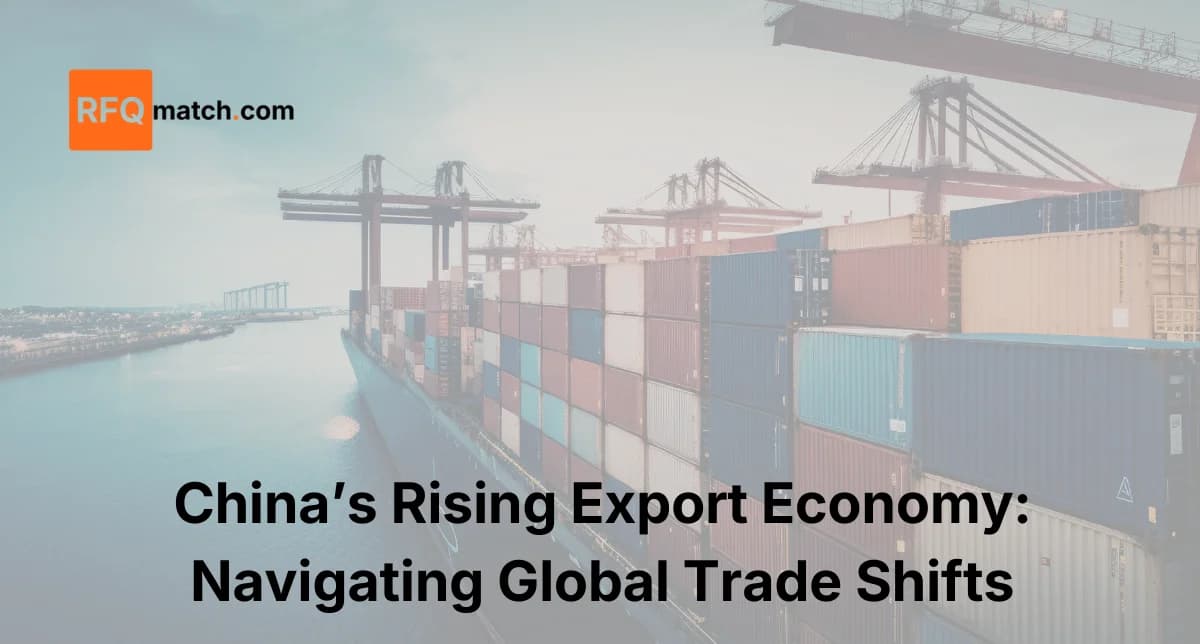
In early 2023, China achieved a notable 22% increase in exports, despite reduced trade with the United States amidst global economic challenges. This growth underscores China’s resilience in the global trade arena, reaffirming its position as the world’s second-largest economy. Economists and policymakers are keen to understand China’s trade strategies and their broader implications.
stat
22% Export Increase In early 2023, China saw a remarkable 22% increase in exports, despite reduced trade with the U.S.
Key Drivers of Export Surge
Technological Advancements and Demand
China’s export surge has been propelled by sectors such as computer chips, automobiles, and electronics. Rapid technological advancements and rising global demand have particularly benefitted these industries. The global semiconductor shortage has positioned China as a crucial supplier. Additionally, the automotive industry's focus on electric vehicles, aligned with global sustainability trends, has further boosted exports. Meanwhile, consumer electronics like smartphones and smart devices continue to cement China’s leadership in high-tech manufacturing.
insight
China’s Tech Advantage Rising global demand for tech products like semiconductor chips and electric vehicles is a key driver of China's export growth.
| Sector | Key Driver | Impact on Exports |
|---|---|---|
| Computer Chips | Global Semiconductor Shortage | Increased Supply |
| Automobiles | Demand for Electric Vehicles | Boosted Exports |
| Electronics | Rising Demand for High-Tech | Cemented Leadership |
Role of Research and Development
China’s substantial investment in research and development (R&D), paired with a robust supply chain, has greatly contributed to its success. By producing high volumes at competitive prices without compromising quality, China attracts international buyers. By integrating cutting-edge technology with manufacturing, it sets benchmarks in efficiency and innovation, effectively meeting global demand.
Shift in Global Trade Dynamics
Geopolitical Tensions and Trade Strategy
Geopolitical tensions and tariffs have significantly altered the trade relationship between China and the United States, leading to a decline in bilateral trade and reshaping global trade patterns. In response, China has successfully identified alternative markets to offset decreased U.S. demand.
warning
Geopolitical Trade Tensions Tensions and tariffs with the U.S. have altered trade dynamics, pushing China to diversify trade partners.
Diversification of Trade Partners
China has cultivated strong relationships with the European Union, ASEAN countries, and emerging markets in Africa and Latin America. This diversification reduces reliance on any single market and ensures sustained export growth. By fostering these relationships, China mitigates geopolitical risks and explores new avenues for growth.
tip
Focus on Diversification China’s success in diversifying trade partners serves as a model for reducing reliance on single markets and mitigating risks.
Diversification and Strategic Alliances
Belt and Road Initiative
The Belt and Road Initiative (BRI) is central to China’s market diversification strategy, enhancing infrastructure and connectivity. Through the BRI, China invests in infrastructure and provides economic support, facilitating trade and improving market access. This approach allows China to penetrate new markets and build strategic alliances.
Regional Partnerships
China has strengthened trade with African countries through infrastructure investments that improve logistics. Similarly, partnerships with Southeast Asian nations have been bolstered through free trade agreements and economic cooperation projects. These strategies expand China’s global trade influence and promote mutual economic growth.
Implications for Policymakers and Economists
Adapting to Global Trade Shifts
China’s export strategy offers valuable insights into adapting trade policies to emerging challenges and opportunities. Policymakers must consider the impact of China’s diversification on global trade policies and economic stability, developing resilient frameworks to withstand geopolitical and economic fluctuations.
Insights for Economic Resilience
Economists and trade analysts closely monitor China’s strategies to gain insights into optimizing trade policies and fostering economic resilience. Understanding China's export mechanisms is crucial for predicting future global economic trends.
Q: How did China achieve a 22% increase in exports despite reduced trade with the US?
A: China's export growth was fueled by strong demand in sectors like computer chips, automobiles, and electronics, driven by technological advancements and global market needs. The country also diversified its trading partners, increasing exports to the EU, ASEAN countries, and emerging markets, which compensated for the reduced trade with the US.
Q: What role does technology play in China's export strategy?
A: Technology is central to China's export growth. The country has capitalized on the global semiconductor shortage and increased demand for electric vehicles and consumer electronics by leveraging its R&D investments and advanced manufacturing capabilities to produce high-tech goods efficiently.
Q: How does the Belt and Road Initiative contribute to China's export growth?
A: The Belt and Road Initiative (BRI) helps China expand its market reach by investing in infrastructure and connectivity in partner countries, facilitating trade flows, and building strategic alliances. This initiative opens up new markets, reducing dependency on traditional trading partners.
Q: What implications do China's trade strategies have for global economic policies?
A: China's diversified trade strategies suggest the need for other countries to reconsider their economic policies to adapt to shifting trade dynamics. By studying China's approach, policymakers can develop frameworks to enhance economic resilience and reduce exposure to geopolitical risks.
Q: Why is it important for policymakers to monitor China's export trends?
A: Monitoring China's export trends provides insights into global economic shifts and helps predict future market demands. Policymakers can use this information to adapt national trade strategies and ensure their economies remain competitive and resilient.
Conclusion
China’s export growth, driven by technological demand and strategic expansion, indicates a nuanced shift in global trade dynamics. By adapting to these changes, China reinforces its economic stature and sets a precedent for nations striving to thrive under similar conditions. Continued examination of these trends is essential for shaping and analyzing international trade policies effectively.
Sources
Source: supplypro.ca

RFQmatch.com
RFQmatch.com is a platform that connects buyers who submit Requests for Quotation (RFQs) with qualified suppliers, making sourcing faster, easier, and more transparent.
View company profileRelated Articles

The impact of the EU Machinery Regulation 2023/1230 on RFQ questions, supplier selection and monitoring compliance
4 min read

10 Ways Buyers Can Assess and Check Security Compliance of New Suppliers
3 min read

Top 10 Reasons Suppliers Lose RFQ Opportunities
3 min read

Energy Audits Pricing Guide: Understanding Costs and ROI
6 min read

Energy Audit Decision: Simplifying the Choice
3 min read