AI Roadmap for Mid-Sized Food Processors
Unlock the potential of AI: Strategies, challenges, and solutions for mid-sized food processors to modernize and stay competitive.
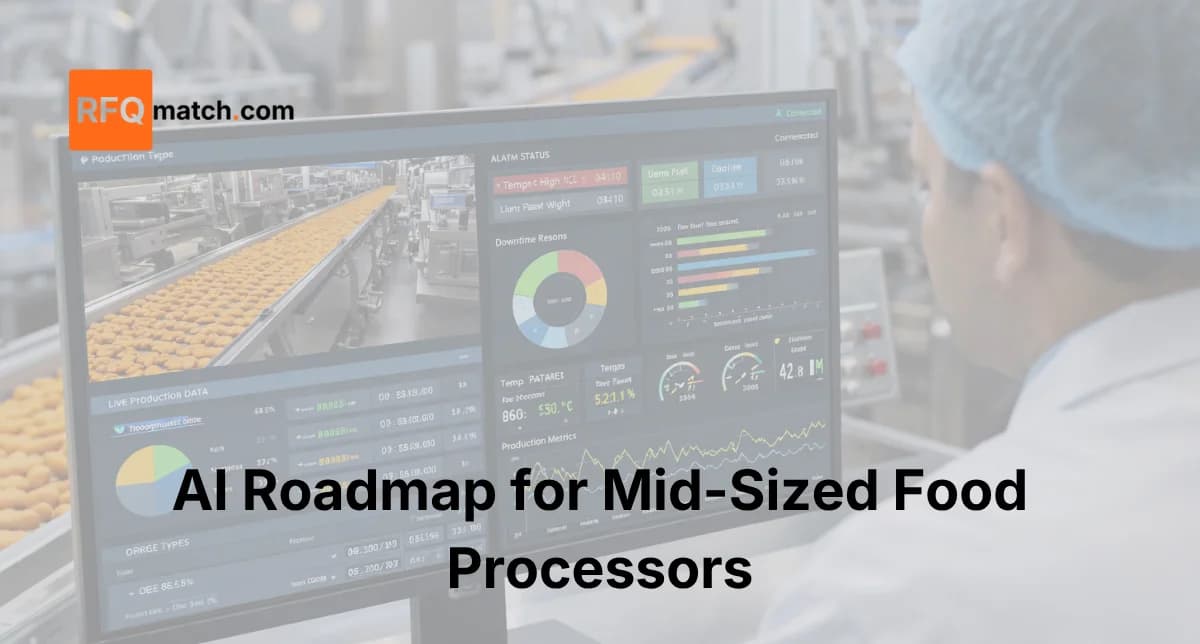
Introduction to AI in the Mid-Sized Food Processing Industry
Artificial Intelligence (AI) offers significant potential for the food processing industry, promising everything from enhanced efficiency to improved supply chain management. As consumer expectations for product quality and safety continue to rise, AI provides critical insights and automation capabilities that can transform operations. However, misconceptions remain, especially among mid-sized processors who view AI as a quick fix that can bypass necessary infrastructure upgrades. While AI is transformative, it is not a silver bullet. Successful implementation requires foundational investments in system modernization, paving the way for future technological advancements.
warning
AI is Not a Silver Bullet AI is transformative but cannot replace the necessary system upgrades. Viewing AI as a quick fix can lead to costly missteps.
Challenges Faced by Mid-Sized Food Processors
Mid-sized food processors encounter similar supply chain challenges as larger companies but with fewer resources to address them. A common myth is that AI can eliminate the need for system modernization, leading some to mistakenly believe AI implementation will effortlessly enhance capabilities.
Data Fragmentation and Silos
The main obstacle in effectively leveraging AI is the fragmented and disconnected data environments in which these businesses often operate. Unlike larger corporations with comprehensive IT infrastructures, mid-sized manufacturers often rely on disparate systems like Enterprise Resource Planning (ERP), Manufacturing Execution Systems (MES), and Excel spreadsheets. This results in inefficiencies and data silos, causing significant blind spots in data visibility and accuracy.
| System Type | Purpose | Common Issues |
|---|---|---|
| ERP | Manage business processes | Data silos |
| MES | Track production data | Limited integration with other systems |
| Excel | Manual data handling | Inconsistent data management |
Importance of Data Harmonization
For AI to be genuinely effective, data harmonization is essential. This process transforms scattered data sources into a unified and coherent source of truth, crucial for accurate insights and decision-making.
The Process of Data Harmonization
Data harmonization involves understanding existing data models, cleansing data for consistency, and integrating various data systems. For instance, if product quality data is logged in an MES, inventory levels are managed in an ERP, and customer feedback is manually entered in a spreadsheet, insights remain skewed without harmonization. Achieving data harmonization allows companies to contextualize data effectively, making AI tools more potent and reliable for driving operational improvements.
tip
Data Harmonization is Key Unifying scattered data sources is essential for AI to provide accurate insights and support decision-making.
Constraints in Capital and IT Resources
Mid-sized food processors often operate under significant constraints, particularly regarding capital and IT resources. These limitations directly affect their ability to invest in necessary technological upgrades and AI implementations.
Balancing Innovation with Resources
With limited resources, decision-makers must carefully balance the need for innovation against financial constraints, often prioritizing immediate operational needs over long-term technological advancements. Each investment decision involves a calculated risk, as the expense of AI must be justified when basic digital infrastructure gaps persist.
| Challenge | Description | Strategic Response |
|---|---|---|
| Data Fragmentation | Disconnected data environments | Invest in data harmonization |
| Capital Constraints | Limited financial resources | Balance short-term needs with long-term goals |
| Regulatory Compliance | FSMA 204 upcoming deadline | Enhance traceability with AI tools |
Navigating Regulatory Requirements
Compliance with regulations adds another layer of complexity that cannot be overlooked. The upcoming Food Safety Modernization Act (FSMA) 204, set to take effect in 2028, emphasizes the need for enhanced traceability and data-driven operational efficiency.
Strategic Integration of AI
Aligning with such regulations requires a robust data infrastructure that many mid-sized processors currently lack. Strategic use and integration of AI can automate compliance tracking, improve traceability, and ensure that operational processes meet or exceed legal mandates, offering a competitive advantage.
info
FSMA 204 Deadline Approaching The FSMA 204 compliance deadline is set for 2028, emphasizing the need for improved traceability and data efficiency.
Building a Roadmap for Successful AI Deployment
Creating a successful AI roadmap involves more than just technological investment; it demands a cultural shift towards innovation and strategic planning.
Key Elements of a Successful AI Roadmap
To achieve measurable benefits, mid-sized food processors must establish foundational pillars supporting AI deployment. This involves data harmonization, fostering a culture of continuous learning, and adaptation. Lessons from failed AI projects often underline the importance of clear objectives, stakeholder buy-in, and phased implementation plans.
Strategic Implementation and Adaptation
A successful roadmap begins with identifying specific business challenges AI can address, such as reducing production downtime or enhancing quality control. Phased implementation allows businesses to manage risk while adapting to unforeseen challenges. Starting with a pilot on one production line can refine AI algorithms and workflows, building confidence and ensuring the AI solution delivers tangible business value before scaling organization-wide.
tip
Start with a Pilot Use phased implementation by piloting AI on one line to manage risk and refine workflows before scaling up.
Q: Why can't mid-sized food processors rely solely on AI without modernizing their existing systems?
A: AI is reliant on accurate and integrated data to provide valuable insights. Without modernizing existing systems to harmonize fragmented data sources, AI implementations can result in inefficiencies and incomplete data visibility. Modernization ensures a unified data source, enabling AI to perform effectively.
Q: How can mid-sized food processors begin harmonizing their data?
A: Data harmonization starts by assessing existing data models, cleaning up inconsistencies, and integrating data from various sources such as ERP, MES, and spreadsheets. This creates a cohesive view of operations, crucial for obtaining accurate AI-driven insights.
Q: What happens if a mid-sized processor tries to implement AI without addressing data silos?
A: Implementing AI without resolving data silos can lead to inefficiencies and unreliable outcomes, as the system will lack comprehensive, accurate data to analyze. This could result in misguided decisions and failure to achieve desired operational improvements.
Q: How can AI assist mid-sized processors with upcoming FSMA 204 compliance?
A: AI can automate compliance tracking and improve traceability, ensuring operational processes meet FSMA 204 mandates. By leveraging AI, processors can enhance their data-driven efficiencies and gain a competitive edge in regulatory adherence.
Q: What strategies can mid-sized food processors use to balance innovation with resource constraints?
A: Mid-sized processors should consider phased AI implementation, starting with pilot projects to manage costs and mitigate risks. Focusing on specific business challenges allows for strategic allocation of their limited resources, fostering sustainable innovation growth.
Conclusion
Mid-sized food processors face unique challenges in harnessing AI's power, but the rewards of overcoming these obstacles are significant. By focusing on data harmonization, understanding regulatory demands, and building a comprehensive technology roadmap, these businesses can position themselves to leverage AI effectively. Embracing a strategic approach that balances financial prudence with innovation ensures AI becomes an enabler of success, not a costly misstep.

RFQmatch.com
RFQmatch.com is a platform that connects buyers who submit Requests for Quotation (RFQs) with qualified suppliers, making sourcing faster, easier, and more transparent.
View company profileRelated Articles

The impact of the EU Machinery Regulation 2023/1230 on RFQ questions, supplier selection and monitoring compliance
4 min read

10 Ways Buyers Can Assess and Check Security Compliance of New Suppliers
3 min read

Top 10 Reasons Suppliers Lose RFQ Opportunities
3 min read
Energy Audits Pricing Guide: Understanding Costs and ROI
6 min read
Energy Audit Decision: Simplifying the Choice
3 min read