Access Control Decision: Simplifying the Choice
A comprehensive guide to making informed access control procurement decisions confidently.
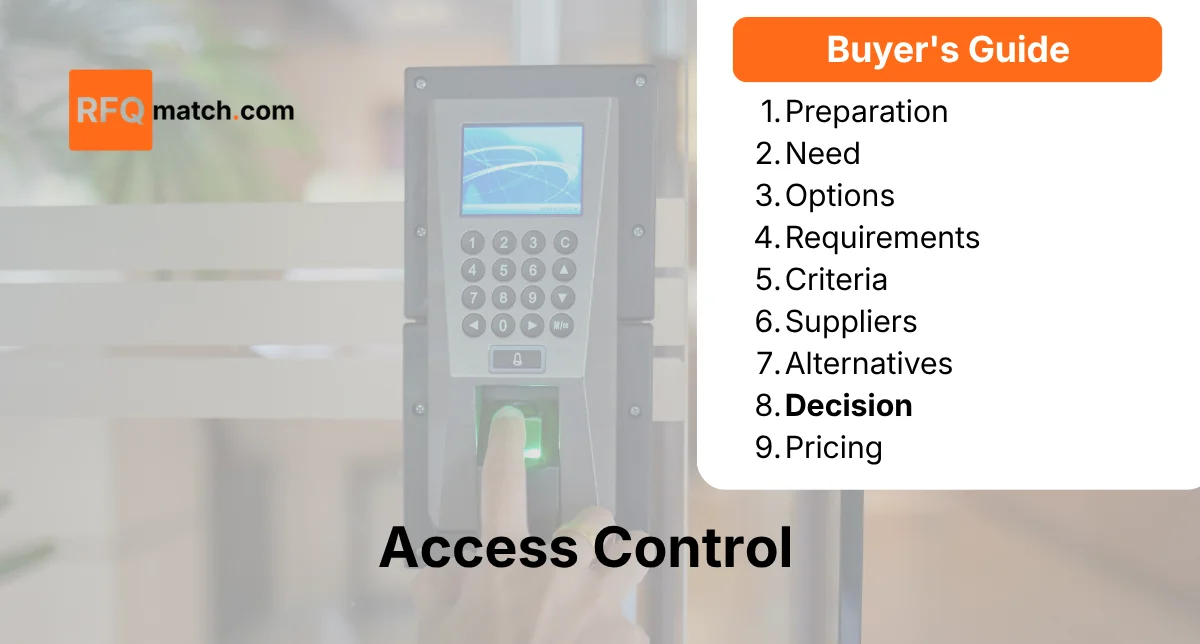
Related Buyer Guide Articles
Procurement professionals often face decision fatigue, particularly when navigating the complex landscape of access control solutions. Faced with a myriad of choices—from biometric systems to key card entries—the risk of analysis paralysis can loom large. Each option presents its own set of specifications, cost factors, and supplier evaluations, making the task feel overwhelming.
This comprehensive guide aims to cut through the clutter, providing a clear path to making informed access control procurement decisions confidently. By detailing critical evaluation criteria, highlighting cost considerations, and offering a methodology for comparing suppliers, our guide delivers actionable insights tailored to your needs.
Setting realistic expectations is crucial. Understand that achieving optimal access control involves not just selecting the right technology but aligning it with the specific security objectives of your facility. This requires a structured approach to assess both current and future access needs.
With our streamlined decision-making framework, you will move past indecision and unlock the potential of tailored access control solutions. Begin your journey toward a more secure workplace with confidence.
Final Checklist
In the procurement of access control systems, a final decision checklist is crucial to ensure all elements are considered and documented effectively. This checklist acts as a guiding framework, ensuring that each aspect of the procurement process is evaluated systematically and aligned with organizational security goals.
Confidence Builders
Building Confidence in Access Control Procurement
When embarking on the procurement of access control solutions, decision anxieties often surface due to the complexity and implications involved. Addressing these concerns begins by establishing a robust validation process, which assures stakeholders of the feasibility and effectiveness of the chosen access control systems. A critical step is conducting a comprehensive needs analysis that aligns with the organization's security strategy and future objectives.
Validation Methods to Mitigate Risks
Validation methods are essential in alleviating procurement uncertainties. Implement pilot programs or site-specific tests to evaluate the real-world functionality and compatibility of proposed solutions.
Achieving Stakeholder Buy-In
Gaining stakeholder buy-in involves transparent communication and collaborative decision-making. Schedule cross-departmental meetings to discuss security priorities and gather input from end-users and IT specialists to ensure all potential concerns are addressed.
By systematically addressing validation processes and cultivating stakeholder engagement, procurement professionals can navigate the access control decision-making process with greater assurance and clarity.
Actionable Takeaways
Establish a structured validation methodology to test access control solutions in real operational environments. Encourage stakeholder engagement through clear communication and collaborative planning to build confidence in procurement decisions.
Post Decision Steps
Post-Decision Steps for Access Control Procurement
After selecting the optimal access control system, executing the post-decision steps is crucial to ensure smooth implementation and maximize the system's effectiveness. These steps involve coordinating with suppliers, finalizing contracts, preparing the installation site, and training the staff.
Supplier Engagement and Contract Finalization
Engage with your chosen supplier to finalize contracts that clearly outline deliverables, timelines, and service-level agreements. Ensure all specifications are documented and agreed upon, preventing potential disputes.
Site Preparation and Installation Coordination
Prepare the installation site by coordinating with relevant departments, ensuring infrastructure readiness. This may involve IT network optimization or physical space alterations to accommodate new equipment.
User Training and System Transition
Training team members on the new system is essential for effective implementation. Develop a training program tailored to different user groups within your organization.
Actionable Takeaways
Ensure all post-decision steps are planned meticulously, with a focus on supplier obligations, site preparations, and user readiness. This comprehensive approach will facilitate a seamless transition to the new access control system.
tip
**Avoid Decision Fatigue** Prioritize key specifications and cost factors to streamline your access control choices.
| Category | Checkpoint | Status | Notes |
|---|---|---|---|
| Requirements | All specs documented | ☐ | Ensure specifications align with organizational needs |
| Cost Factors | Budget reviewed and approved | ☐ | Verify costs against initial estimates and market rates |
| Supplier Evaluation | Supplier credentials verified | ☐ | Include checks against industry certifications |
| Technology Options | Technology suitability confirmed | ☐ | Assess compatibility with existing systems |
| Security Level | Security level matches requirements | ☐ | Ensure system meets or exceeds security protocols |
| Scalability | Future expansion needs evaluated | ☐ | Plan for potential scalability requirements |
| Compliance | Compliance with local and industry standards | ☐ | Verify adherence to relevant regulations |
| Support | Post-installation support confirmed | ☐ | Check SLA details for ongoing support |
| Training | Training provisions for staff included | ☐ | Ensure comprehensive training sessions are planned |
| Contract | Contract terms thoroughly reviewed | ☐ | Review terms for delivery, warranties, and penalties for delays |
| Testing | System testing procedures defined | ☐ | Outline testing protocols post-installation |
info
**Key Insights for Confident Access Control Procurement** Conduct pilot programs to validate access control systems in real-world scenarios. Leverage third-party evaluations for technology assurance. Enhance stakeholder confidence through clear communication and alignment with organizational security goals.
| Timeframe | Action | Owner | Dependencies |
|---|---|---|---|
| Week 1 | Finalize contracts and confirm deliverables | Procurement Manager | Supplier proposal acceptance |
| Weeks 2-3 | Coordinate site preparation with departments | Project Coordinator | Infrastructure readiness |
| Weeks 3-4 | Supervise installation and initial testing | IT Specialist | Complete site readiness |
| Week 4 | Conduct comprehensive user training sessions | Training Lead | System installation completion |
tip
**When You're Still Undecided** If decisions remain unresolved, consider revisiting pilot results and stakeholder feedback. Re-evaluate your strategic alignment with company security goals to identify the best-fit solution.

RFQmatch.com
RFQmatch.com is a platform that connects buyers who submit Requests for Quotation (RFQs) with qualified suppliers, making sourcing faster, easier, and more transparent.
View company profileRelated Articles
Energy Audits Pricing Guide: Understanding Costs and ROI
6 min read
Energy Audit Decision: Simplifying the Choice
3 min read
Energy Audit Comparison & Alternatives Guide
6 min read
How to Evaluate Energy Audit Suppliers: Comprehensive Procurement Guide
6 min read
Evaluation Framework for Energy Audits: A Comprehensive Buyer's Guide
7 min read